
Quick Answer
Getting your garage door ready for a Kentucky winter means four things: seal the gaps, lubricate the moving parts with a cold-weather grease, check your springs and balance before the cold stiffens them, and make sure your opener and sensors are clean of salt residue and road grime. Do this in October or early November, before the first hard freeze, and you avoid most of the breakdowns that show up in January.
Why Winter Is Hard on a Garage Door Here
Fayette County winters don't stay one temperature. You get a 60-degree day followed by an overnight freeze, then ice, then salt trucks, then a thaw. That swing does two things to a garage door: metal parts expand and contract, which loosens hardware and stresses springs, and road salt gets tracked in on tires and boots, which accelerates rust on tracks, hinges, and the bottom of steel panels. A door that's been fine all summer can suddenly start sticking, grinding, or refusing to close once the temperature drops and the lubricant inside the rollers thickens up.
Seal the Gaps Before the Cold Air Finds Them
Start at the bottom. The rubber weatherstrip along the bottom of the door hardens and cracks with age and sun exposure, and once it's brittle it stops sealing against the slab. Press a thumbnail into it — if it doesn't bend easily, replace it before winter, not after. Also check the vinyl seals along the sides and top of the frame (sometimes called brush or astragal seals). Gaps here let in cold air, moisture, and small drafts that push your heating bill up if your garage shares a wall with living space.
What to look for
- Daylight visible around the edges of a closed door
- Cold air you can feel near the bottom seal on a windy day
- Cracked, flattened, or torn rubber that no longer springs back
Lubricate the Moving Parts — But Use the Right Product
Hinges, rollers, springs, and the track itself all need lubrication before cold weather sets in, because standard grease thickens in low temperatures and makes the door heavier to lift, which strains the opener motor and the springs. Use a silicone-based or lithium-based garage door lubricant rather than WD-40, which is a solvent and actually strips lubrication over time rather than adding it. Spray hinges, roller bearings, and the springs themselves, then wipe off excess so it doesn't attract dust and grit.
Test the Balance and Listen to the Springs
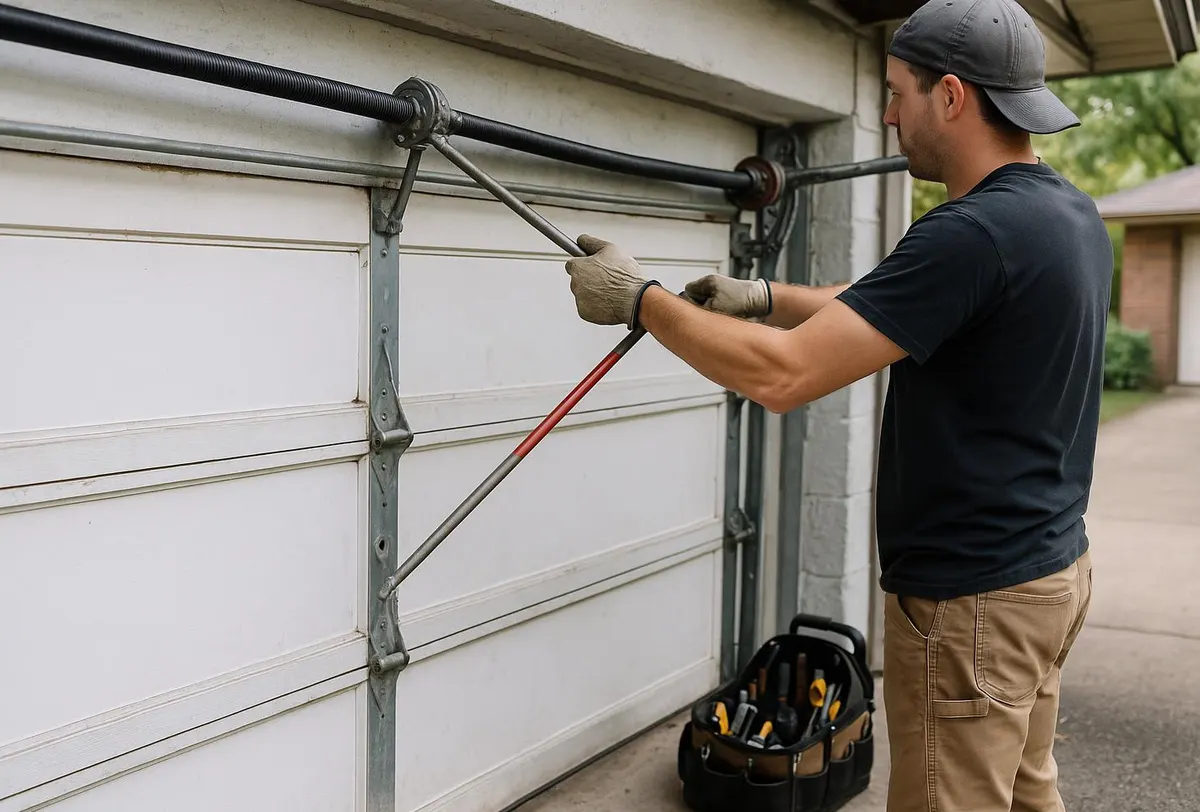
Disconnect the opener (pull the emergency release cord) and lift the door halfway by hand. It should stay in place on its own. If it drops or shoots up, the springs are out of balance, and that imbalance gets worse as cold weather adds stress to the metal. A door that's hard to lift in October usually gets harder, not easier, once temperatures drop into the 20s and 30s. Springs are also most likely to snap during the first real cold snap of the season — the sudden temperature drop makes already-worn steel more brittle. If you hear a loud bang from the garage on a cold morning, that's very likely a spring letting go.
Check the Opener, Sensors, and Battery Backup
Road salt and winter grime splash up onto the photo-eye sensors near the bottom of the tracks, and a dirty or misaligned sensor will make the door reverse for no obvious reason or refuse to close at all. Wipe both sensors with a soft cloth and make sure they're aimed directly at each other. If your opener has a battery backup, test it now — battery performance drops in cold weather, and a dead backup is a bad surprise during a winter power outage caused by ice on the lines.
Protect Against Rust
If your door is steel, rinse road salt off the bottom panel and tracks periodically through the winter, especially after you've been driving on treated roads. Salt residue sitting on metal all season is what causes pitting and rust streaks by spring. A light coat of garage door lubricant on exposed hardware also helps shed moisture.
When to Call Lexington Garage Door
If your door is hard to lift, unbalanced, or making a grinding or banging noise, don't wait for a cold morning to find out the springs have failed completely — that usually means a door stuck shut right when you need it most. Our Spring Replacement service handles that safely with the right tension for your door's weight, and our Garage Door Maintenance visits cover a full inspection, lubrication, hardware tightening, and sensor alignment in one trip, so you're not guessing at what needs attention before winter hits.
If you're in Lexington, Georgetown, Nicholasville, Richmond, Winchester, Versailles, Paris, or Frankfort and want your garage door checked before the first freeze, call Lexington Garage Door today to get it done right.